Hydrotherapy is a part of alternative medicine (particularly naturopathy), occupational therapy and physiotherapy that involves the use of water for pain relief and treatment.
Hydrotherapy encompasses a broad range of approaches and therapeutic methods that take advantage of the physical properties of water, such as temperature and pressure, to stimulate blood circulation and treat the symptoms of certain conditions.
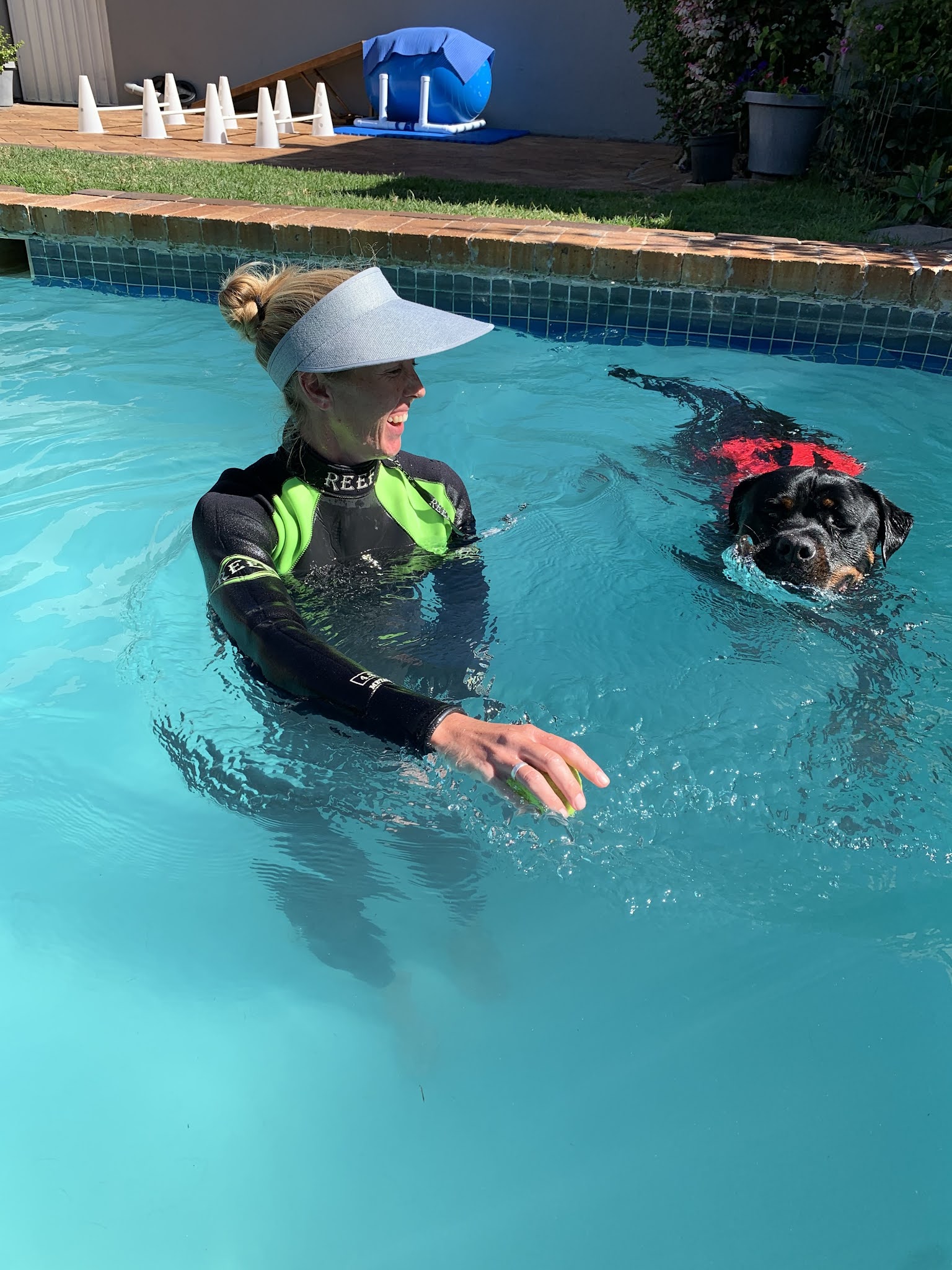
But it is not exclusively reserved for humans. Hydrotherapy has become a popular way to treat animals, particularly because it is a low impact exercise on the joints and great for weight loss. Think of it as water aerobics for animals.
My Rottweiler Kygo, started his hydrotherapy journey almost two years ago when he was limping. He was walking uncomfortably and was being treated by an animal physiotherapist. His exercise routine was significantly reduced while he was healing and she recommended hydrotherapy as a form of exercise and for rehabilitation.
Kygo took to hydrotherapy, quite literally like a duck to water. He absolutely loves swimming and is very motivated to do the exercises, even without luring him with treats. All he needs is a tennis ball. He gets so excited on a Friday afternoon when we put on his swimming harness and it takes both my husband and I to hold him back while his hydrotherapist Sheneé does the warm up exercises with him, because he is so focused on getting into the pool! And while he has since recovered from his limp, we continue with hydrotherapy as a form of exercise (and because he loves it so much) and to maintain his weight.
I chatted to Sheneé, an Animal Physiotherapist from Southern Edge Veterinary Physiotherapy, to find out more about hydrotherapy…
Tell me more about hydrotherapy…
Hydrotherapy usually takes place in a heated swimming pool, or on an underwater treadmill, and works towards strengthening, functional gait retraining, neurological rehabilitation, improving joint mobility, weight loss, fitness and more.
What are the benefits of hydrotherapy for dogs?
Hydrotherapy for dogs allows for both passive and active range of motion exercises using the heat, buoyancy and resistance of the water, making it a low impact form of exercise.
The benefits are that the body weighs less in water, therefore placing no stress on joints and allowing easier movement in painful joints. The resistance of the water allows for good muscle building and improving cardiovascular fitness. The hydrostatic pressure of the water gives proprioceptive feedback, making the dog more aware of their body in the water, also having an effect on lymph movement and decreasing oedema (swelling). The warmth of the water allows muscles to be more relaxed, eases joint pain and makes it comfortable to exercise.
Who are good candidates for hydrotherapy?
Animals who are:
- recovering from orthopaedic surgery
- showing weakness due to age and/or joint osteoarthritis
- recovering from a neurological pathology
- sporting athletes for conditioning and fitness
- overweight
What are the most common conditions you treat with hydro?
- post injury
- post-surgery – knee surgery, hip surgery
- arthritic animals needing to build muscle strength and improve joint mobility
What if dogs are afraid of water? Can they be trained for hydrotherapy?
Some dogs love water, whether it is swimming in a dam or the ocean, but are afraid to get into a swimming pool. Other dogs are afraid of water in general. We ease them into it slowly during their first introduction to swimming. We allow the dog to be off lead to smell and familiarise themselves with the area around the pool. Then we offer treats or play with a toy, slowly encouraging them towards the ramp into the pool. We try to get them into the pool on their own, but in some cases we may have to place them in the pool with their legs in the water, standing on the ramp.
We then start with short straight line swimming to the ramp, to ensure they know where their safe space is and how to get out of the pool. Once they are comfortable in the water, we start doing laps around the pool, in different directions and sequences.
How long does a session last?
A session is typically 45 minutes but we spend about 20 to 30 minutes in the swimming pool.
 What does a session entail?

Before getting in the pool, we get feedback from the owner, give the dog a quick check to make sure there are no new areas of pain or discomfort, then we do a short warm up with land-based exercises before we start the hydrotherapy. Each session is tailored to that specific dog’s needs, working towards achieving our goals set out for that dog.
I use an abacus for keeping record of what we have done in the pool, left turns, right turns, serpentines, resistance swims, number of laps, etc. At each session we try to increase the amount of work done to build strength.
Do you use any props or tricks to get the animals to respond?
Treats, toys and lots of voice encouragement is what I use. This is different for each dog and what they best respond to.
Is hydrotherapy a treatment on its own or part of a treatment plan?
Hydrotherapy forms part of a treatment plan. We first do a full body assessment to identify areas of pain, joint restrictions and weakness. We then discuss with the owner the best way forward to achieve reducing pain, increase mobility and strength, and overall health and wellbeing for the animal.
How can people contact you?
Southern Edge Veterinary Physiotherapy
Sheneé – 082 815 1655
Gillian – 062 349 6613
Email: southernedgeanimalphysio@gmail.com
*This article first appeared in the We Love Pets SA June magazine.
Comments
Post a Comment
I'd like to hear what you think about my posts, so leave me a comment...